

“By basic foresight methods, we mean information that is largely qualitative and periodic, gleaned from reading trend reports, running SWOT-style scenarios, and tracking dashboards. Advanced foresight, in contrast, is systematic and data/AI-enabled, using methods like machine-learning forecasts, weak-signal and sentiment mining, and using digital twins or war-gaming to stress-test strategic moves. […] Those grappling with foresight implementation bottlenecks most often cite a common blocker: the degree to which strategic decisions are driven by short-term pressures.” - doing foresight differently
People: Cancelling social plans. Laptop boyfriends. Right to repair. Bubble is labor.
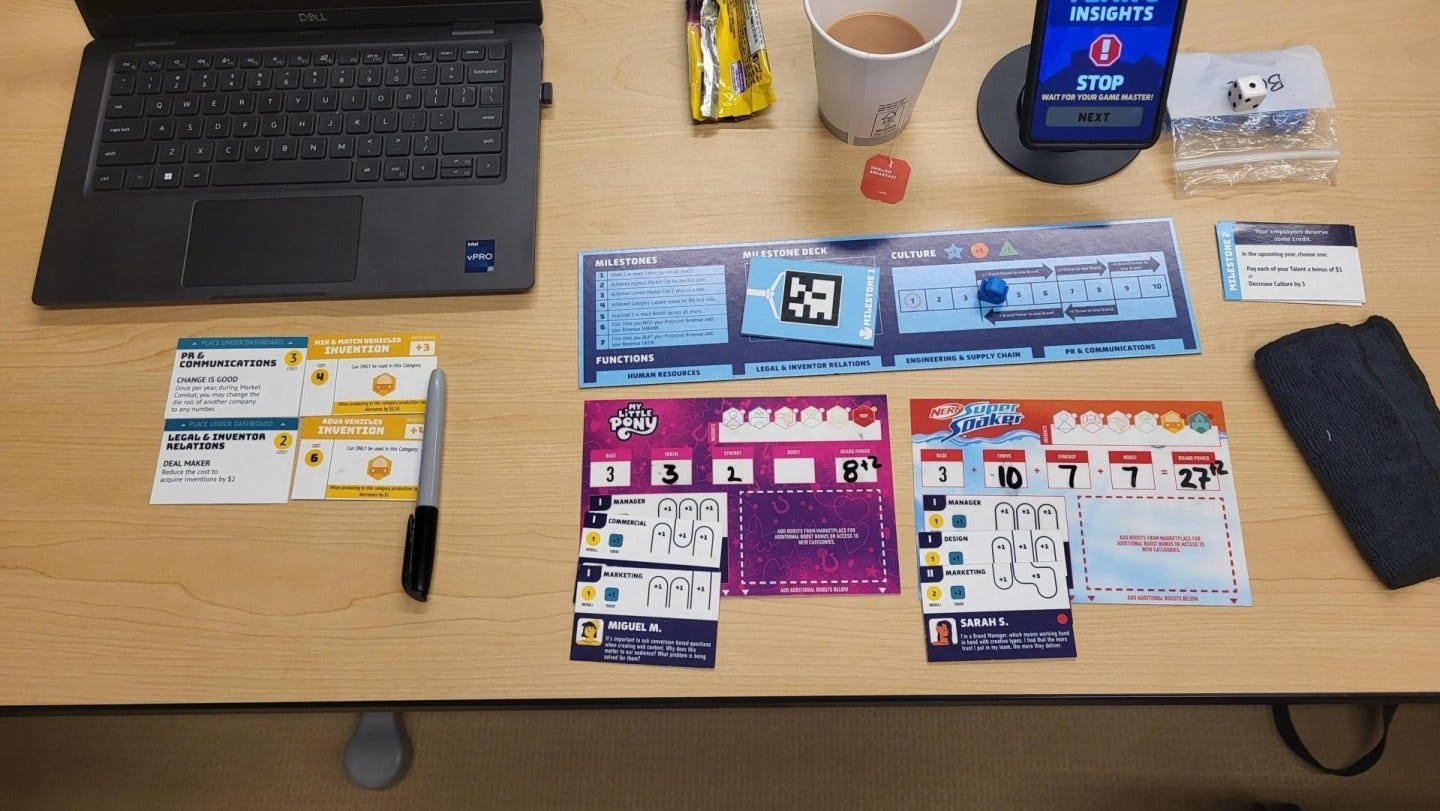
Business: High january. Tech workers layoffs. Tabasco gloss. Hasbro gamifying CEO jobs (and finds future leaders). Culture debt.
1000 blank white cards.Planet: Underwater wall. Vertical dinosaur tracks. Regenerative design book.
Security: Notes on Venezuela. Five ideas about 2025. 20kW laser to kill drones. UK cyber regiment.
Tech: Polyurethane-breaking enzyme. When computers were humans. Building more robots. Cooling (datacenters) in space. Electrotech.
AI: Financial planning. And the brain. Next 24 months. Claude addiction. Global threat evolutions.
The Bureaucratic Ballet of Dreams and Drones
In the bustling metropolis of New London, Reggie Twiddle found himself knee-deep in bureaucracy and sinking faster than a lead balloon in a kiddie pool. The brushed-steel walls of the Ministry of Strategic Overhaul loomed over him like a giant’s bad mood, while he desperately ruffled through the latest editions of “Pattern Book for Regenerative Design.” It was 2037, and the construction industry had decided it was more eco-friendly to build castles out of dreams—dreams which, sadly, crumbled under the weight of financial spreadsheets.
As a forward-thinking engineer tasked with implementing sustainable practices, Reggie had a series of lofty goals, including a community garden on the top floor, which would not only rage against the machine that was urban sprawl but also provide tomatoes the size of soccer balls. Alas, he feared receiving complaints about neighborhood pigeons—those fowl creatures with more opinions than a YouTube comments section.
While Reggie paced, his cohort Sheila squinted at her holographic HUD, analyzing data from Space Data Centers, where AI agents handled calculations like first-year accounting students under the influence of caffeine. “We’ve reached peak drone saturation,” she exclaimed, glancing at the five-unit-thick manual of drone regulations that was more complex than a James Joyce novel. “These radiators can cool down a heating blast but barely keep our sanity afloat.”
“Can’t we just simulate some clever spreadsheets while we roast marshmallows on our burnt-out dreams?” Reggie muttered, channeling his inner pirate at the inefficiencies plaguing their office’s aura. It was nearly as suffocating as the reading list from his college days, filled with forgotten luminaries who served as humans before technology’s advent—the original “human computers,” who had calculated the most complex data wrapped in the simplest of parchment.
It was lunchtime when the crisis cascaded down like a poorly launched drone. Sheila, with her obsession for true crime YouTube documentaries, suddenly zipped from her desk, abandoning her post mid-math. “I have to save my relationship!” she declared. Reggie responded with a thumb up, thinking how splendidly odd it was that her comforter featured a thorough map of the cosmos, while she still hadn’t figured out how to efficiently map the territory of her love life.
And speaking of relationships, cultures around the globe were experiencing phenomena of their own—like that of ‘culture debt,’ where companies raced for rapid growth, trampling over team morale and trust. As he calculated ways to squeeze more joy from less culture, he chuckled at the absurdity. A mindless marvel of unintended consequences, indeed!
Meanwhile, as Sheila tweeted from her lunch spot in the employee garden (now dominated by verdant tomatoes), a financial planner was excitedly discussing the latest revolution in budgeting powered by AI—a brave new world where algorithms actually offered usable insights instead of cryptic riddles. “The next generation, Reggie! They’ll be job creators, or so they predict.” He had his doubts; looking around, a few of their coworkers were contemplating applying for roles as professional punchline deliverers.
“Novelty provides comfort,” he thought to himself, alluding to his half-hearted temptation to try cannabis as an alcohol substitute during Dry January. In the corner of his mind, he half-heartedly chuckled at the irony of needing plant therapy for finding joy in tower blocks and meetups.
Yet, as studies came to light about robots replacing human workers faster than one could say “DIY repair,” Reggie felt an uneasy sense that these innovations were not the correct remedy.
Suddenly, he recharged his enthusiasm, bolstered by a recent discovery in Brittany, France, unveiling a 7,000-year-old underwater wall, a testament to ingenuity. “History teaches us that walls don’t always symbolize barriers,” he mused, envisioning the ghosts of ancient engineers cheerfully mocking his daily struggles at the Ministry.
A lightbulb flickered in his brain. “What if we could innovate how we innovate” became his rallying cry—a plea to coalesce community-driven projects equipped with excitement over avalanche-like bureaucracy.
In the twisted tale of modern life, amidst YouTube distractions, culture debt, and the relentless march of technology, Reggie Twiddle simply had one mission: to ensure that his colleagues remembered what it felt like to play the game of creation, with laughter, history, and maybe a few less drones flying overhead. And with that thought, he dove back into the bureaucratic abyss, armed with airy dreams and tomatoes the size of aspirations.