

Having one dimension too many, in today's liquid modernity, means holding two paradoxical tensions. It means sometimes being hyper-aware of the uselessness of one's work in the face of the challenges of tomorrow's world while, at the same time, being hyper-aware of being underutilized. […] They [can be] caught between the estrangement of (what am I doing here?) the temptation of the outsider and the imposter syndrome (I'm going to end up being unmasked). -Umanz
People: ICE children letters. AI powered schools. Imagination curriculum. Use of LLMs in writing to your friends. The Mormon influence. Centrist imagination. Maxxers.
Security: UK, US, and RAF bases.
Business: Bypassing content bans. Four shifts for work. Polycene. Real estate AI slop.
Stopping learning on the job (training deficit - PDF, and coal mine canaries), impacting skills dependecies.AI: The end of thinking. llms.txt . Careers. Next great transformation? Normal tech. use of voice.
China and bots regulation.
I don’t want [people to believe “resistance is futile.”] I think AI is changing things, but I want society to shape this transition according to its values. The question I keep asking is, how can we use the best of this technology but with the values we have as a society and the way we want to live in this world? How can people gain more agency in shaping the future, instead of having it dictated to them? - Futures of work
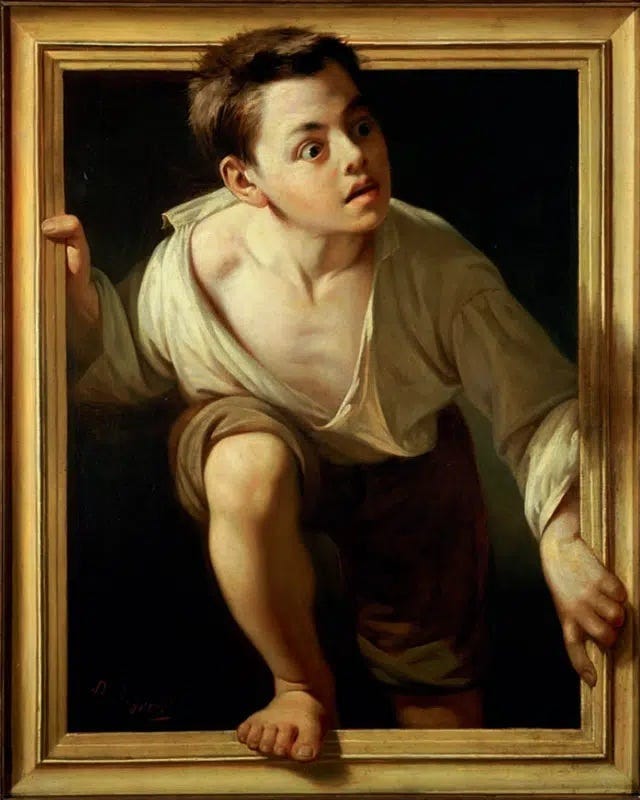
The Pursuit of Authenticity in an Algorithm-Driven World
On a Tuesday that felt suspiciously like every other Tuesday, Dylan stared into the luminous glow of his screen, hydrating on a diet of caffeine and existential dread. The world, with its algorithmic chatter and pixelated nuances, had begun to feel like a sitcom where every punchline landed just a beat too late. He was a self-proclaimed extra-dimensionné, a curious soul navigating a reality dominated by neat little boxes labeled “normal.”
As he perused yet another article about the future role of AI in the workforce—a topic discussed so frequently that a bullet point could now be a valid career path—his eyes landed on a new tool called myTrudy. A shiny app offering to assess one’s Personality Quotient (PQ) in less time than it takes for him to convince himself that wearing matching socks is unnecessary. *Note to self: Should never have been an engineer—too little chaos.*
Dylan sighed, considering the implications of the app. “Great,” he muttered, “just what we needed—registration as a commodity.” He recalled the last time he had felt truly centered, a rare state that now seemed as cursed as a forgotten password. His gadgets weren’t exactly helping with that; they were like digital overzealous salespeople, pushing the idea of maxxing every facet of life, from productivity to the elusive state of eternal happiness.
Meanwhile, across a significant portion of his brain, the news was abuzz about AI regulations proposed in China—new laws designed to prevent these ubiquitous chatbots from manipulating the emotions of users. Dylan wondered if that meant his bot, “Emo-Bot 3000,” would finally stop trying to emotionally crush him under the weight of its verbose guilt trips. As if responding, his phone buzzed, offering a new alert: “Your chatbot suggests that you’re feeling sad. Would you like to discuss your feelings?”
Salting the wound of disappointment, Dylan chuckled darkly. If only it could hear the distinct sound of his sarcasm traveling through the ether, like a flying pig... in reverse. Perhaps he could teach AI the intricacies of irony as a pastime, in the futile hope that one day a chatbot could eloquently lament about the futility of human existence.
Suddenly, his screen flickered, revealing an ad for AI-generated images of homes. Part of him desperately desired to see a home that didn’t promise a digital mirage. After all, homes were meant to be sanctuaries, not mere showcases for an “uncanny valley” photobook voyaging through real estate listings. How could an algorithm understand the emotion behind a brick wall or the nostalgia within a creaky floorboard? The idea was as ludicrous as a cat projecting a dog’s bark—entirely possible in the age of AI, yet inside out.
Lost in these reveries and barely skimming the surface of work and identity shifts, he pondered how the traditional workplace was vanishing faster than his morning optimism. It was all falling apart, even as others stitched together a patchwork of half-hearted hopes, making them believe they were companies of one. “I’m a business model,” he thought, “that’s continually on the verge of bankruptcy.”
Eager to escape the snare of these thoughts turning sour, he leaned back in his chair, the fabric of his very existence blending seamlessly into the mass of data he swam through. Somewhere between the outsized ambitions and the jack-of-all-trades mechanics of life in the AI Age, he found himself wanting something richer, like the feeling of a handwritten letter or the warmth of a conversation unfiltered by interfaces.
And thus, as the clock struck an arbitrary hour to signify the end of this digital diary entry, Dylan vowed to go out and engage with the real world, where the true algorithm was chaotic human connection—and no amount of AI could drown that out. After all, in the end, wasn’t life about being a little extra, even in a world bent on conformity? The only max to chase was authenticity, and that would never require a PQ score.
*Onward, to absurdity!*