

The break from total reliance on oral communication allows people to become more introspective, rational, and individualistic. Abstract thought develops from the circular world of sound with its round huts and round villages, people move over time toward linear cause and effect thinking grid-like cities and a one thing at a time and one thing after another world that mimics the linear lines of running and type. … ”Human beings in primary oral cultures do not study. They learn by apprenticeship, hunting with experienced hunters, for example, by discipleship, which is a kind of apprenticeship by listening, by repeating what they hear, by mastering proverbs and ways of combining and recombining them, but not study in the strict sense.” Derek T
People: Vikings as a jobdesc. A country of geniuses. The wine mom. Quittr .. prn.
Business: US employment drops.
Tech: Flightradar for ships. Pervasiveness of digital systems in defence (PDF, in FR).
Planet: Obsession with growth. City rooftops as a shield. Global warming accelerates.
Futures: Thinking about tomorrow (PDF). Tech for low-trust predictions.
AI: How to detect deepfakes. The one person stack. The SaaSpocalypse.
A demo of ads-supported chatbots…
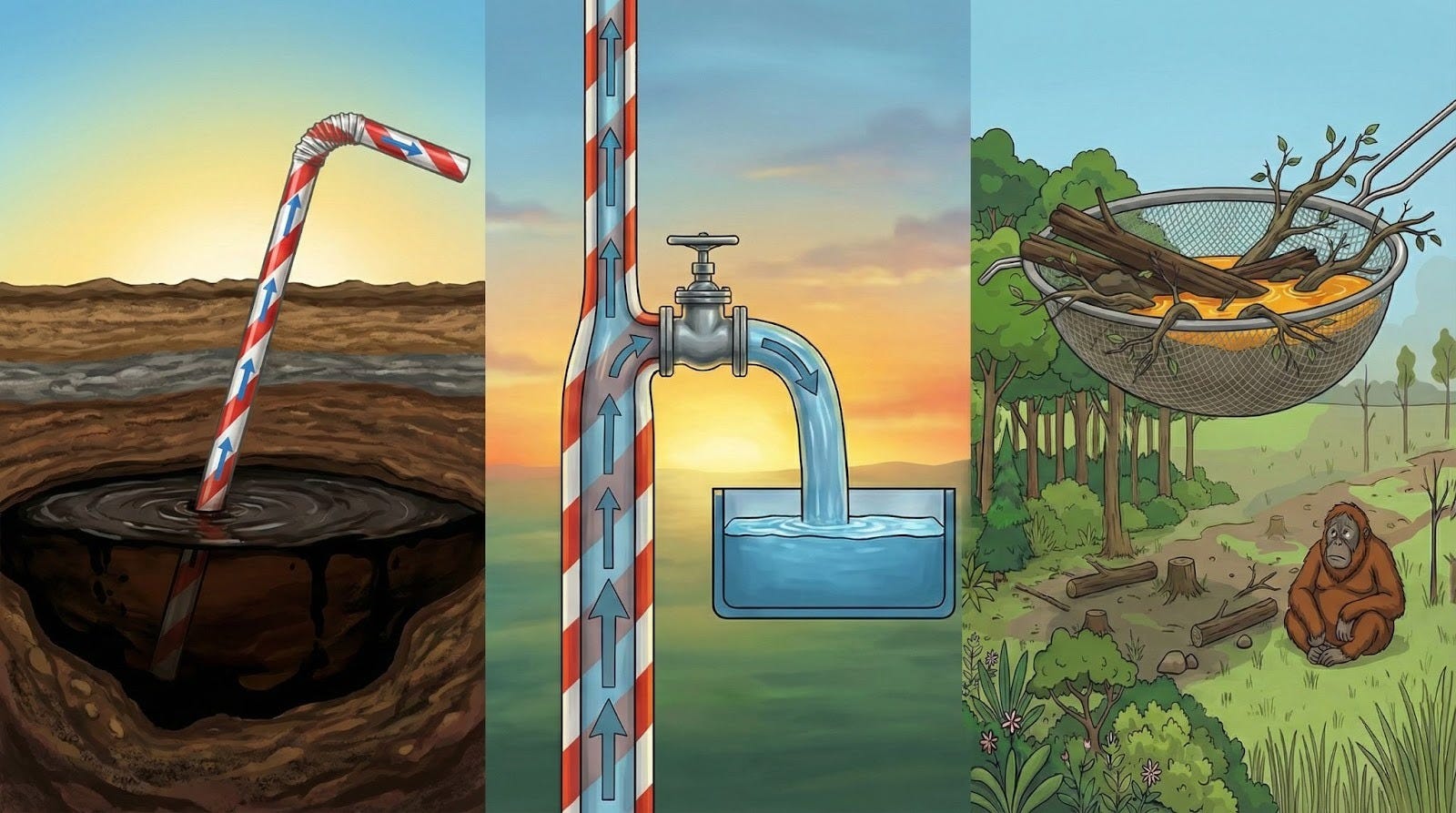
Clickbait Catastrophes
Margo D’Amico had always believed that the secret to happiness lay hidden in the depths of the internet: a cornucopia of memes, viral videos, and the fond hope that one of those clickbait titles might, just perhaps, contain genuine wisdom. This led her to an ominous corner of the web, where she stumbled upon a prediction market that allowed users to bet on world events—not financial forecasts but potential calamities like asteroid strikes or political uprisings. It was the digital equivalent of the Grim Reaper’s betting pool, and Margo thought it would be an excellent way to become rich, as if tragedy could indeed strike gold if one held the right cards.
“Why bet on doom?” she mused aloud during a particularly dull Monday meeting, “I could buy my old apartment back with just one catastrophic event!”^1 However, the irony was as thick as the smog above Zurich, where the city was fighting back against rising temperatures with an extensive green-roof initiative. As Margo scrolled through social media, she could almost hear the plants sighing in relief, whispering sweet nothings to rooftops that needed less tar and more thyme. Maybe she should channel her entrepreneurial spirit into urban gardening instead? That would surely bring her happiness… as long as she didn’t accidentally garden herself into a jungle.
Speaking of entrepreneurial spirits, her friend Russell had started an unconventional app aimed at combating what he deemed a growing “digital vice.” Somehow, he believed that users could be shamed into sobriety—a kind of behavioral time-travel back to the surface of the moral high ground. “Girls just want to have fun, but do they also want to have no shame?” he would say, mingling ludicrous philosophy with first-time app development, all while Margo discreetly judged him for thinking that 1.5 million downloads spelled salvation for a generation. Based on the news in the last week alone, a user could metaphorically drown in digital guilt without ever admitting they were waist-deep in pixels.
However, a bodacious breach of AI ethics lay in wait. The latest predicament was a legal “tool” launched by a tech company that was less of a shiny utility and more akin to a wobbly table on a yacht: totally non-committal. While companies scrambled to adapt, the world felt the thrum of desperation—in the aftermath of lost tech jobs and mounting unrest, where Margo often imagined hordes of wine moms banding together to drink away their woes, forgetting that societal progress should not depend solely on alcohol-induced tears.
Meanwhile, Margo had joined the swelling ranks of misinformation victims, inadvertently liking a faux news story about an AI running for president. Was that a sign of the times, or just a witty footnote in a dystopian novel waiting to happen? Thoughts scattered like leaves in a digital wind, as she began crafting a post that would go viral for all the wrong reasons. And yet, with every click, she felt the discomfort of the world’s realities looming in the background, like a storm cloud laden with ominous forecasts of job losses, climate crises, and the gnawing doubt that none of it was real at all—except the mess she now found herself in.
But Margo was nothing if not determined. “Time to embrace my reckoning,” she whispered, guzzling half a bottle of sparkling water. “I may not save the world, but someone out there might get a kick out of how lost I feel.”^2 And so, she began crafting an app called “Crisis Clicker,” a gamified platform where users could accidentally stumble upon solutions for dire global issues, all while sipping wine and avoiding adult responsibilities—because, in Margo’s world, laughter was the best antidote to existential dread.
^1The irony of seeking profits from tragedy is that it tends to end with a heavy tax bill and moral hangover. ^2Much like expectant mothers at the supermarket who only want to marvel at pint-sized shoes for their own children while dreading the sleepless nights ahead.
x