

“Today’s cult of convenience fails to acknowledge that difficulty is a constitutive feature of human experience. Convenience is all destination and no journey.” — Tim Wu, The Tyranny of Convenience (2018)
“For people who think the world is going to be radically transformed by advanced AI, I think it’s helpful to talk less about AGI and instead describe vivid, concrete milestones.” — Helen Toner, on Mythos
People: The celebration of suffering, on Ozempic, cynicism, and good tech. Talking to strangers on OmeTV. Pelouse au repos hivernal: we aren’t built to be trampled continuously (FR). Millenial dads.
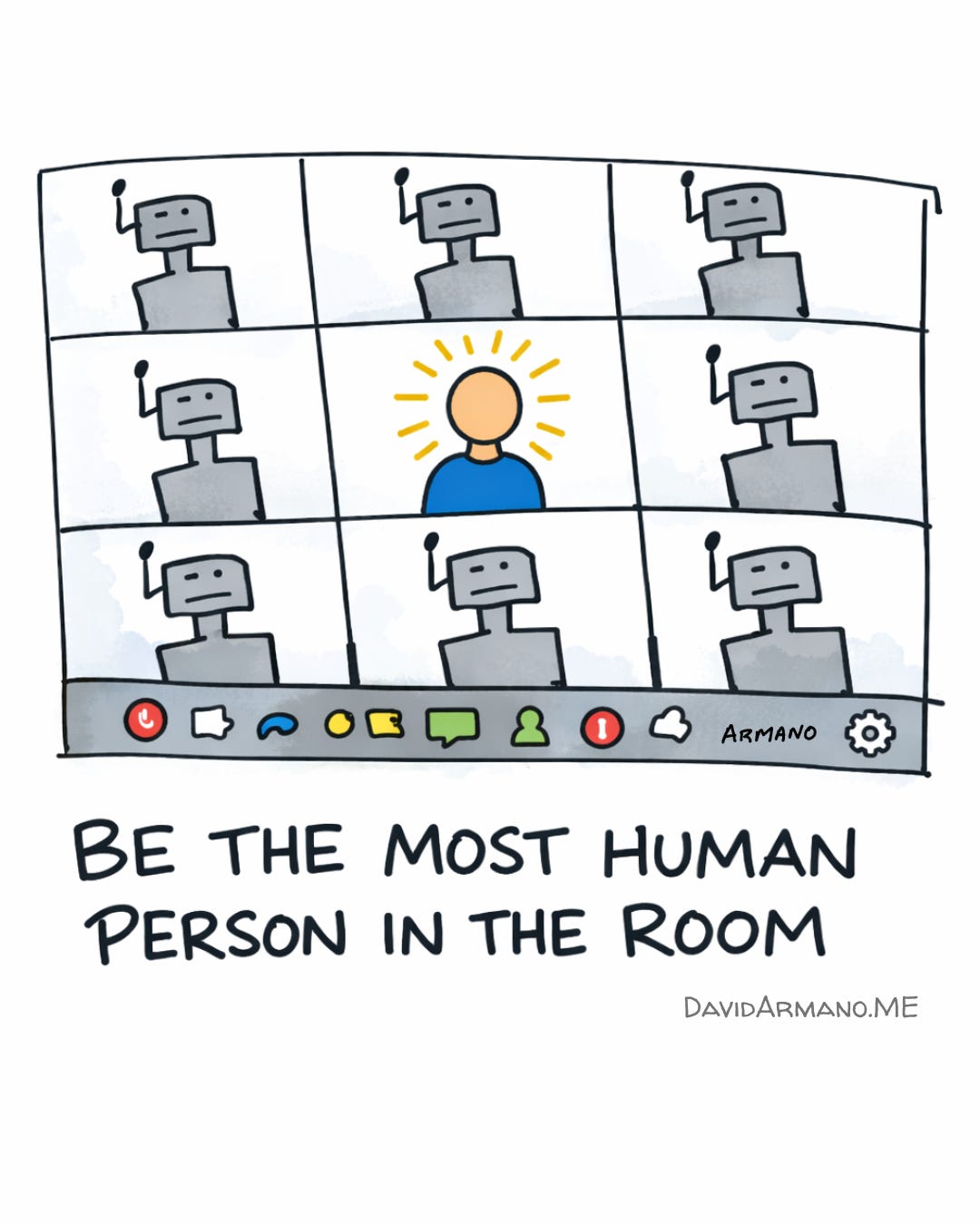
Business: Robustness, and punk health. Chokepoints as the true crossroads of history. Be the most human person in the room. The jet fuel inflection point. Shifts into 2026.
Security: The $20 billion cyber insurance market is predicated on the wrong model as Mythos removes the scarcity of offensive capability. Project Glasswing.
AI: Mythos and how we price risk; critical infrastructure is systemically mispriced.
AI strat: Speed over judgment. AI capability & danger are permanently inseparable. Reimagining education: 1809 Prussian Bildung to design an environment, not a curriculum.
The Mispricing
The first person to understand Mythos correctly was not a technologist, an investor, or a policy wonk. It was Hank, who ran a small actuarial firm in Exeter and who, upon reading the model card on a Tuesday morning, immediately called his wife.
“We need to reprice everything,” he said.
“Everything?” said Charlie, who was used to Hank’s periodic enthusiasms but found this one alarmingly comprehensive.
“Everything.”^1
The model preview had been released by Anthropic with the usual fanfare — blog posts, benchmark charts, a coalition of infrastructure experts assembled to think through implications. Most of the coverage focused on whether Mythos constituted artificial general intelligence. Hank found this question tiresome, in the way a structural engineer finds it tiresome when someone asks whether a building is “really tall.” The building either holds or it doesn’t. What mattered about Mythos was what it could do to infrastructure: power grids, financial systems, water treatment, any networked system where the assumption of safety had been priced in decades ago and never updated.^2
His colleague Avery, who handled the firm’s tech portfolio, was more interested in the classified frontier piece. The US, it argued, wouldn’t lose control of frontier AI — it would choose who else got access. Model weights had been physically walked into Los Alamos in locked metal briefcases, accompanied by armed security. “So it’s not an arms race,” she said. “It’s a toll road.”
“It’s a toll road where the toll collector also designed the car,” Hank corrected.
Across the office, Derek was reading about GLP-1 drugs. Scientists had found genetic evidence explaining why two patients on the same medication could have wildly different outcomes. Some lost weight effortlessly; others were hit by nausea that made the Victorian era look comfortable. Derek, who had been considering Ozempic, found this both illuminating and personally distressing.^3
“It’s the same problem as AI,” Matt observed from his corner. Matt worked in what the firm still called “scenario planning,” though his scenarios had lately become less planning and more cataloguing of surprise. “The tool works, but it works differently for everyone. And nobody’s mapped the individual variation.”
“That’s insurance,” Hank said. “That’s literally all insurance is.”
The conversation drifted, as office conversations do, toward education. Someone shared a piece about Wilhelm von Humboldt, who in 1809 had been asked to redesign Prussia’s entire education system. His answer was not to create a curriculum but to design an environment — Bildung, the free development of a whole human being. No predetermined ends. No training for specific jobs. Just exposure to complexity, friction, and the discomfort of thinking about things that don’t yet have answers.
“That’s what we need now,” Avery said. “An education for uncertainty.”
“We have one,” Derek said. “It’s called being alive in 2026.”^4
Hank went home that evening and sat in his garden. Charlie brought him tea. The risk models he’d spent his career building — mortality tables, actuarial assumptions, the slow accumulation of data into something resembling a prediction — all of them assumed a world that moved at a pace you could measure. Mythos didn’t move at a pace. It moved at a capability. The gap between what the model could do and what the frameworks could price was not a bug. It was the condition.
He picked up his phone and opened the model card again. The benchmark chart extended beyond the frame, as if the system being measured had outgrown the system doing the measuring.
“It’s not that the model is too big,” he told Charlie. “It’s that the frame is too small.”
She nodded. “Reprice everything, then.”
“Everything.”
^1 “Everything” is the kind of word that sounds reasonable in a boardroom and terrifying in a kitchen.
^2 The assumption of safety in critical infrastructure is, in actuarial terms, a polite fiction — maintained not because it’s true but because admitting otherwise would require more capital than most governments are willing to hold.
^3 Derek’s relationship with pharmaceutical innovation was characterised by intense interest followed by immediate personal dread, a pattern he attributed to his mother, who had once cancelled a holiday based on a newspaper article about turbulence.
^4 This observation was met with the silence it deserved, which is to say, the kind of silence that follows a joke that is also completely true.