

“The input is electrons, the output is tokens. In the middle is Nvidia.” — Jensen Huang, Dwarkesh Patel interview
“The American health and wellness system is overwhelmingly focused on fall prevention or injury recovery, not reducing harm during an inevitable fall.” — Graydon Gordian, The Ukemi Edition
People: Endangered butterflies and prisons. The Falling Class: judo breakfalling adapted for civilian life. Nos jalons impalpables (FR). 7,000 years ago, 95% of men vanished from the gene pool. How to read the hidden pain in every job description.
Climate stress test in Paris.AI: Anthropic staff believe Mythos could replace junior engineers within three months. AI inference costs approaching 10% of engineering headcount. Multi-agent is just actor model.
AI strat: Jensen Huang’s token factory worldview. Huawei Ascend as parallel ecosystem, 50% of AI developers are in China. One company halved cost per code change, doubled weekly deployments over five months. Place à l’art agentique (FR).
Geopolitics: AI Swarm: 60–70% probability of a US/Israeli strike before ceasefire expiry — five synthetic expert agents arguing it out. European regulators on Mythos. Ce que la mission Artemis et la guerre en Iran nous apprennent sur les technologies (FR).
Random: Filing the corners off MacBooks — “It is uncomfortable on my wrists, and I believe strongly in customizing one’s tools.” French motorway brown signs have sold the country’s identity for fifty years.
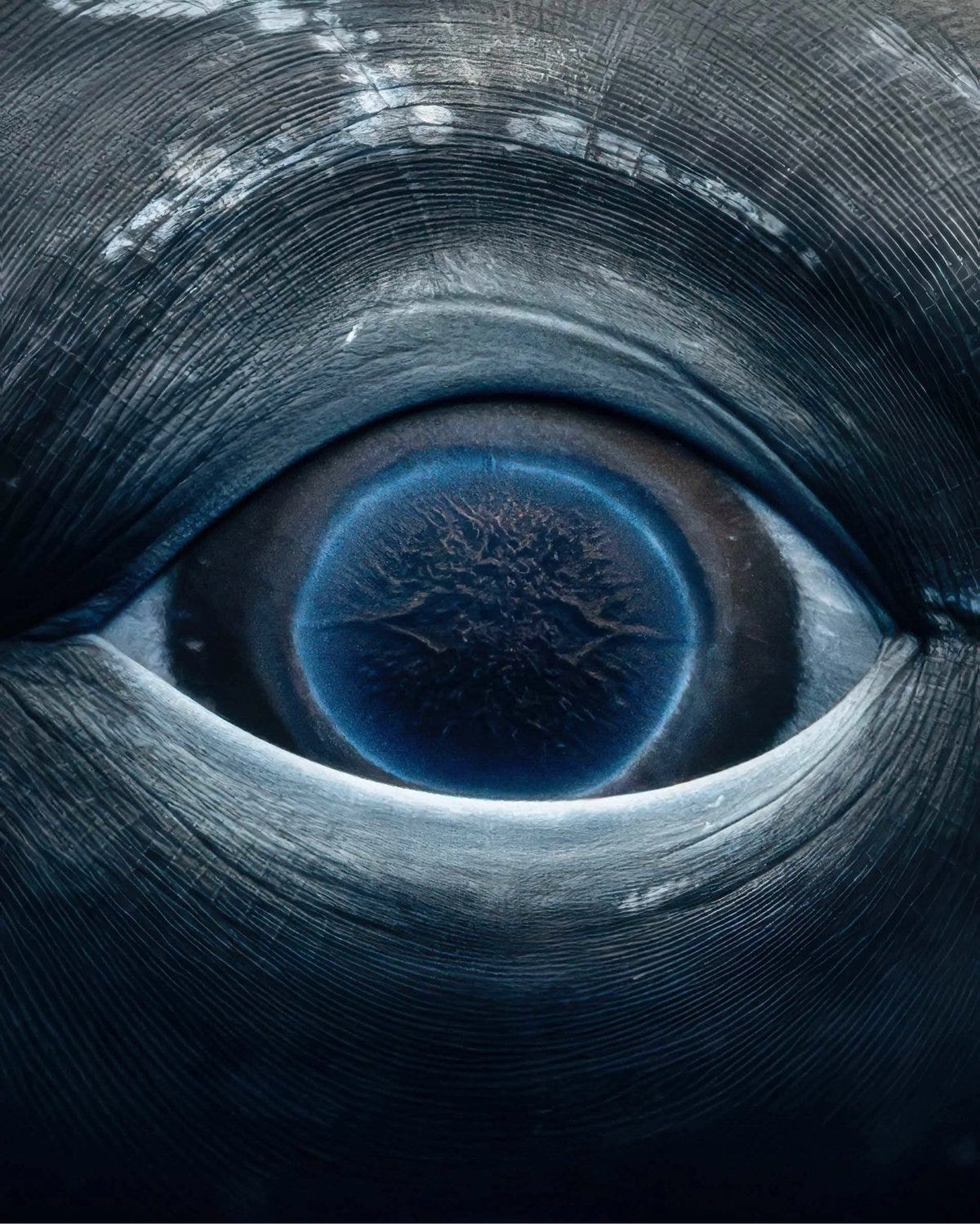
What is life?
Batcloud =)
The Platform Standard
Hank had never given much thought to how chips were made, which was reasonable, since chips had never given much thought to him.^1
He worked in insurance — specifically, the actuarial modelling of infrastructure risk, a job that sounded important and was, though nobody at dinner parties ever asked him to elaborate. His colleague Avery handled the tech portfolio. She had spent the past week reading about Jensen Huang’s interview, in which the Nvidia CEO had described his company’s position in the AI supply chain with the precision of a man who had rehearsed the sentence many times: the input is electrons, the output is tokens, and in the middle is Nvidia.
“It’s a toll booth,” Avery said over lunch. “But the toll booth designed the road, trained the drivers, and is now building a second road in case the first one gets sanctioned.”
“The second road being Huawei,” Hank said.
“The second road being Huawei. And fifty percent of the world’s AI developers are learning to drive on it.”
Their colleague Derek, who worked in what the firm still called “scenario planning,” had been running a different kind of model. Anthropic’s Mythos Preview had just demonstrated something that made Derek’s actuarial assumptions feel, as he put it, “decorative.” A third of Anthropic’s own staff believed the model could replace junior engineers within three months. Not in theory. Not eventually. Within three months.^2
“Replace or augment?” Hank asked.
“Does it matter?” Derek said. “If a third of the people who built it think it can do their junior colleagues’ jobs, the premium on being junior just inverted.”
Matt, who handled the firm’s wellness programme — a role that mostly involved ordering fruit baskets and reading articles about burnout — had been distracted all morning by a piece about judo. Specifically, about a programme called The Falling Class, which taught elderly civilians the art of breakfalling. Fourteen million Americans over sixty-five fell every year. The healthcare system spent billions on prevention and recovery but almost nothing on teaching people how to land.
“It’s the same problem,” Matt said, though nobody had asked him to connect judo to semiconductors. “We build systems to prevent the fall or repair the damage. Nobody teaches the system how to absorb the impact.”
“That’s literally what CUDA does,” Avery said, and then paused, because she hadn’t expected the metaphor to hold.^3
Over the afternoon, they discussed the EU AI Act’s hundredth newsletter edition. Nineteen AI Factories deployed across European supercomputers. Seventy-six expressions of interest for Gigafactories. The AI Office, tasked with overseeing models capable of finding and exploiting every vulnerability in every major operating system, had a planned staff of forty.
“Forty,” Derek repeated. “The DSA has a hundred and sixty people to oversee twenty-six social media platforms. The AI Office gets forty to oversee the models that can hack those platforms.”
“To be fair,” Hank said, “the models could probably do the oversight too.”
Nobody laughed. It was the kind of joke that had stopped being funny approximately two model generations ago.
That evening, Hank went home and found his daughter filing the corners off her laptop with a metal rasp. He asked why. She said the edges hurt her wrists. He asked if she’d considered buying a different laptop. She said she believed strongly in customising one’s tools.^4
He sat down, poured a glass of water, and thought about platforms, standards, the art of falling, and the quiet accumulation of small modifications that, over time, constituted a life. Outside, the road was the same road it had always been. But the toll had changed.
^1 This is, admittedly, a low bar for reciprocity. Chips are not known for their emotional range.
^2 The specific confidence interval was not disclosed. Derek suspected this was because confidence intervals, like junior engineers, were entering a period of existential uncertainty.
^3 It did, though. CUDA absorbs the complexity of GPU programming so that researchers don’t have to land on bare silicon. Avery found this both satisfying and slightly alarming, like discovering that a pun you’d made accidentally was also structurally true.
^4 She had found the idea on a blog post by a man who described filing his MacBook with the same matter-of-fact tone one might use to describe adjusting a bicycle seat. The internet, Hank reflected, was a place where extreme customisation and complete indifference to manufacturer intent coexisted peacefully.