

“We need to stop evaluating corporate leaders simply on the basis of how much wealth they create for investors. A healthier yardstick would be this: the extent to which leaders create firms that are economically, ethically, and socially sustainable.”
— O’Toole & Bennis, A Culture of Candor (2009), via workfutures.io“The broadcast ended with God Save The King and, of course, the shipping forecast.” — WITI: The Turning Off Long Wave Edition
People: RTO is about worship — new research (Adam Grant et al.) finds executive return-to-office mandates correlate with narcissism, not productivity. GLP-1 raises employment 27 points — previously not-employed women starting weight-loss drug treatment are 27 percentage points more likely to be working 18 months later. Brain exhaustion follows muscle rules. RAISE US: AI workforce retraining.
AI strat: Opus 4.7: 14 hours, $251 — working autonomously, it built a software package that would take 2–17 weeks of human engineering. AI revenues exceed capex depreciation. Discernment is now a skill — what to build and when to leave it, when to have the difficult conversation rather than defer it: capabilities AI doesn’t replicate, now identifiable as the competitive edge.
Society: “I’d rather date a centaur”. Conversational malnutrition — the growing deficit in meaningful exchange produced by current platforms.
Tech: BBC Radio 4 longwave: 100 years off — at 00:00 GMT on June 27, the signal ended, signed off with the shipping forecast. EU AI Act: high-risk pushed to 2027.
Foresight: “Godzilla” El Nino: Africa has months. US anthem ends in a question — “O’er the land of the free and the home of the brave”?.
Random: The Kennedy half-dollar — finest coin in the US Mint. Against houseplants — “I tried to keep houseplants because everyone did”.
AI: Chatbot era as twilight — not the peak. Open-weights: own exponential curve — Chinese open-weights models lag the frontier by 6–12 months but are accelerating independently, cheap to run and modifiable by anyone.
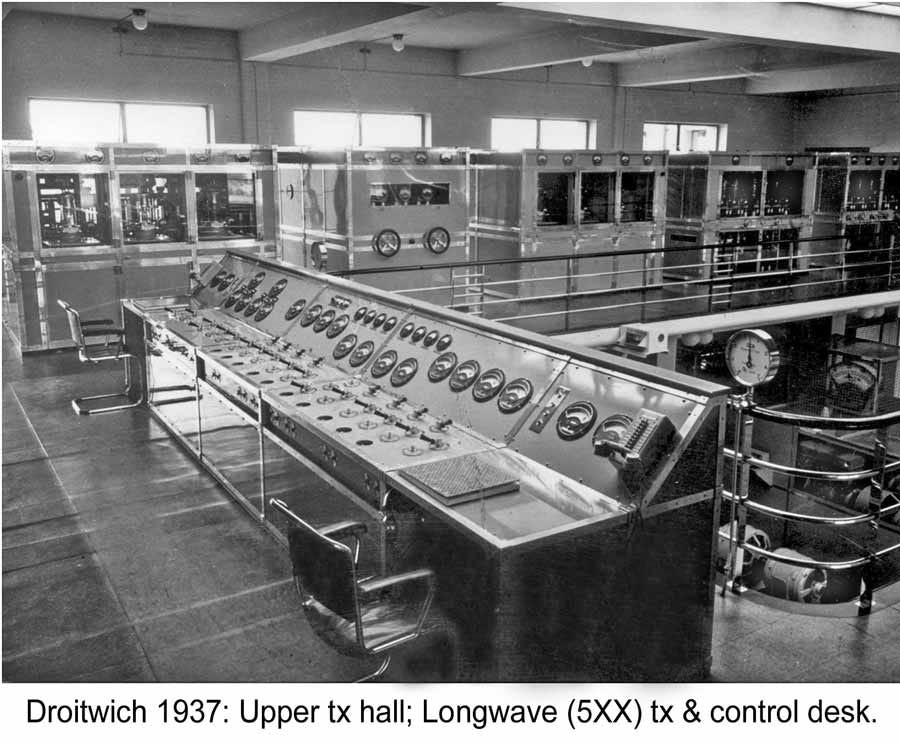
Long Wave
Miriam had been monitoring the longwave signal for thirty-one years, which meant she had been monitoring it for longer than most of her colleagues had been alive, which meant she had stopped mentioning it at parties.
The signal lived at 198 kHz. She had become, over three decades, the kind of person who could tell from a slight variation in the carrier tone whether something was wrong at the transmitter before the diagnostics flagged it. This was not a skill she had been trained for. It was a skill she had acquired the way you acquire a knowledge of when a child is about to be sick — from accumulated attention, pattern by pattern, until the pattern was part of you.
The last day was a Friday, which felt wrong. Endings should be Saturdays. Saturdays had a particular quality of finality. Fridays still had the weekend ahead of them, a sense of something deferred. But June 27 was a Friday and nobody had asked her opinion, so she drove to the monitoring station at four in the morning as she always did, made a cup of tea, and sat down.
The letter from RAISE US was on her desk. She had not opened it yet. Her manager Yusuf had forwarded it with a message that said: worth looking at when you have a moment, which was Yusuf’s way of saying: you should look at this now. RAISE US was the new thing — Gina Raimondo’s people, some governors, a mission to help the workforce transition into the AI economy. Workshops. Retraining. New skills for a new era. The letter had a photograph of a woman in her fifties standing at a whiteboard with an expression that suggested she had recently discovered something excellent about the future.1
The shipping forecast came on at 00:48 GMT. Miriam listened to it the way you listen to something when you know it is the last time, which is to say badly, because you are too aware of listening. Viking, North Utsire, South Utsire. Cyclonic, five to seven, occasionally severe gale eight...
She had heard the shipping forecast eleven thousand times. She knew, from experience, that you never really heard it — it was something you received, the way you receive background radiation or the knowledge that it is Tuesday. The sea areas were a geography she had never visited but knew precisely: Forties, Cromarty, Forth, Tyne. She had once explained to her daughter that the shipping forecast was a kind of poem, and her daughter had said that was very nice, Mum, and asked if she wanted another biscuit.
At 00:00, the final BBC Radio 4 longwave transmission would end. Not the station — Radio 4 would continue on FM and digital. Just this frequency. Just 198 kHz, which had been broadcasting continuously since before the Second World War, which carried the signal further than any other format precisely because the waves were long enough to bend around the curvature of the earth.2
She opened the RAISE US letter.
It was warm, as these things go. It acknowledged that people in her sector had built careers on specific technical knowledge that was now changing rapidly. It said that RAISE US believed in the dignity of work and the possibility of reinvention. It said that Janet Foutty, a former CEO of Deloitte Consulting, had recently joined their leadership and had herself begun again at fifty-six, and that this proved something about possibility. There were modules. There were pathways. There was a beginner’s mindset framework.
Miriam thought about the beginner’s mindset framework for a moment.
Then she thought about the thermionic valves. There were eleven spares. They were the kind of component that was no longer manufactured, which meant that when the last one failed — if the transmitter had been kept running — there would have been no replacement. The decision to end the longwave broadcast had been partly economic and partly about the audience of ninety thousand, which was small but not nothing, and partly about the fact that nobody had ordered more valves. At some point the decision not to order more valves was itself a decision to end, except nobody had said so at the time. The ending had been decided before anyone announced it, in the moment someone decided the infrastructure wasn’t worth maintaining.3
This, she thought, was not specific to radio.
At 00:00, the carrier went down. The monitoring equipment registered it: clean, complete, nothing wrong at the transmitter. The silence was the sound of everything working correctly.
She sat with it for a while. The RAISE US letter was still in her hand. Outside, the sky was beginning to do what July skies do in the north — not exactly light but not exactly dark, a diffuse grey that suggested morning was making preparations. A bird was practicing something.
She had thirty-one years of pattern recognition at 198 kHz, a familiarity with carrier waves fine-grained enough to feel anomalies in her chest, a knowledge of the sea areas that she had never consciously acquired. She did not know what any of this was worth in the new landscape, or whether it translated. She suspected that knowing what to listen for, and how to listen, might be worth something. She suspected that patience with frequency — the willingness to attend to the same signal long enough to hear what was in it — might still have applications.
She also suspected that nobody would describe this as a module.
She put the letter in her bag and drove home in the grey light, through sea areas she had never visited, under a sky that was not quite one thing or the other.
1 The woman in the photograph may have genuinely discovered something excellent about the future. It is also possible she had been asked to look like this. The letter did not clarify.
2 Radio 4’s longwave service was also, technically, one of the official methods by which British nuclear submarines could determine whether the government was still functioning. This capability has now migrated to other formats. What it means for a submarine crew to receive the shipping forecast as news of governmental continuity is a question Miriam had always found interesting and never quite answered to her satisfaction.
3 The eleven spare thermionic valves are still in storage somewhere. Nobody has thrown them away yet. This is either sentimentality or the standard lag between an ending and the administrative closure of an ending, which is always longer than the ending itself.