

“There are tranquil ages, which seem to contain that which will last forever. And there are ages of change, which see upheavals that, in extreme instances, appear to go to the roots of humanity itself.” — Karl Jaspers, The Origin and Goal of History (1949)
“Ne demande ton chemin à personne, tu risquerais de ne plus pouvoir te perdre.”
— Nahman de Bratslav
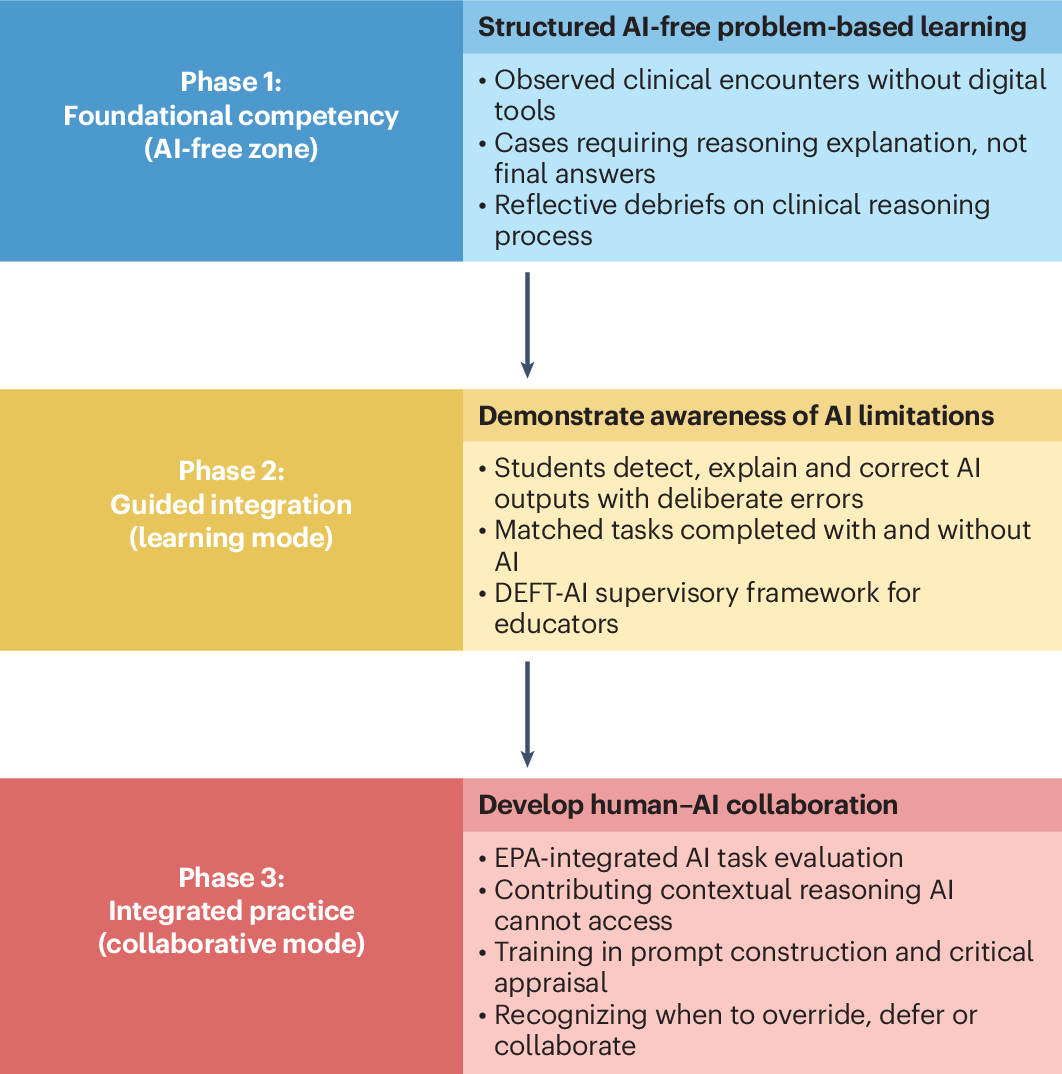
AI: Medicine guarding against “never skilling” — residents over-relying on AI never build clinical judgment. AI coding tools are addictivewith engineers burning out. Midjourney pivots to healthcare. RL on forecasting beats coding/math as the better scaling path for safe planning.
AI strat: AI-heavy firms grow headcount 10%, entry-level +12% — selecting for who knows how to use AI, not replacing humans. US chip controls pushed China to treat open-source as resilience infrastructure: 11× more LLM forks per week from China-linked developers after each export control. OpenAI wants 5% of itself owned by the US government (~$42bn). Ex-Anthropic researchers raise $200M for Mirendil to sell the self-improvement loop.
Geopolitics: China installed 3× more wind capacity than the rest of the world combined last year; all 6 top turbine makers are now Chinese. Wars depleting global tungsten stocks. Autonomous drones killed human soldiers for the first time.
Security: ToddyCat stealing Gmail. Cloudflare now charges AI crawlers per page. Flock’s plate readers and AI cameras are turning US streets into a surveillance net.
Science: The ocean’s missing middle: the mesopelagic zone (200–1,000m) contains 70% of all animal life on Earth and runs the biological pump sequestering carbon for centuries, and we have barely been there. Hookworms and drugs. A cell built from scratch now grows and divides. Job title of the future: nature’s drug designer.
People: 6.2 million Americans want a job but aren’t looking — 4th consecutive monthly rise, now above 2008 levels. Goldman Sachs: AI will temporarily displace 9% of US workers over a 10-year transition. Gen Z at work: only 29% say a casual hug is acceptable; 28% say handshakes only.
Foresight: WaPo looked back to its 1976 bicentennial forecast and wrote 50 years forward to the tricentennial. Le grand rallongis — an essay on slowness, detours, and the merveille of not optimising everything (FR).
Random: Pokémon Go data trained AI now used to assist military drones in war zones. China’s UBTECH U1 robots mimic dead relatives with silicone skin, emotion reading, custom replicas of specific people. Air Karen: AI that fights airline customer service.
The Biological Pump
Vera had been diving for eleven years and had never told anyone about the light at five hundred metres, partly because there wasn’t any, and partly because she suspected they would find the darkness disappointing.
She was eating a croissant in the hotel lobby when Derek sat down across from her without asking. This was, she had recently learned from a memo circulated at her institution, potentially no longer acceptable. The memo had specified that “unsolicited approaches to seated colleagues” fell into a category of touch-adjacent behaviours requiring “advance consent alignment.” Vera had not been touched. She was sitting in a chair. She said nothing and offered him half the croissant.
“I had a resident today,” Derek said, “who ordered the ECG first, then asked the AI for a differential, then looked at the ECG. In that order.”
Vera considered this. “And?”
“The AI was right. It’s always right. But she didn’t look at the ECG first.”1
The conference was called Intelligent Systems in Depth, which could have meant almost anything, and did. Vera was presenting tomorrow on what she called “the dark middle of the ocean” — the mesopelagic zone, 200 to 1,000 metres, where 70 per cent of all animal life on Earth existed in perpetual twilight, cycling carbon downward in a process so crucial that without it, global temperature targets would already have been exceeded. The process was called the biological pump. Most people at the conference did not know it existed. Most people anywhere did not know it existed.2
“What she really doesn’t know how to do,” Derek said, still on the resident, “is sit with not knowing. She can’t tolerate ambiguity. The AI removes the ambiguity, so she’s never had to practise with it.”
Across the lobby, a woman in a blazer was running a workshop on workplace touch. Vera had passed the flipchart earlier: Navigating Consent in Collaborative Spaces: A Practitioner’s Guide. About twelve people sat in a circle, no one touching anyone, watching a slide that said Handshake: Moderate. Hug: Evaluate Context. One man at the back was reading something on his phone. He was, presumably, evaluating context.
“The ocean is the same problem,” Vera said. “We go to the deepest point. We go to the surface. Nobody goes to the middle because it’s expensive and inconvenient and there’s no photograph that makes sense to a press release. Organisms live there that we’ve never seen. They carry carbon down into the deep for centuries. And we’re trying to model the whole climate without any baseline data from that zone.”
Derek took a piece of the croissant. “Is there an AI for that?”
“Yes,” Vera said. “And it’s wrong.”3
The workshop had reached a section called Unsolicited Approaches. The man on his phone closed whatever tab he had open — it looked, from a distance, like a live parcel tracker — and returned to listening. Someone across the circle attempted a test handshake. The facilitator gave a thumbs-up.
Later, Vera would write in her field notes: Giving people tools that eliminate uncertainty does not make them better at uncertainty. It makes them better at the tools. She wrote this below a sketch of her dive profile: 200, 350, 500, 650, 800, 950 metres. Each stop a datapoint. Each return trip building a baseline that had not previously existed.
Progress. Of a kind.
1 She would become an excellent clinician. She just needed eleven more years of disregarding the AI’s confidence intervals to find out.
2 The term “biological pump” sounds like something installed below a boiler. It is instead the reason we are alive.
3 Specifically, it was wrong about carbon flux between 400 and 600 metres during thermal stratification events. Vera had been trying to explain this to a funding body for three years. They kept asking about the surface.