

“If we are always arriving and departing, it is also true that we are eternally anchored. One’s destination is never a place but rather a new way of looking at things.”
— Henry Miller, via workfutures.io“Fable is better than me at my job, but Fable alone would be a mediocre investor.”
— unnamed VC, via Exponential View
Shameless plugin: The Handover
An online game to play a consultant being replaced by AI, and how you’ll adapt. Bring a deck of cards and something to write.
#Solo #Journaling #TTRPG
People: GLP-1s cut sick leave — weight-loss drugs reduced long-term sickness leave by 17% over four years in Denmark. Cities emptying of children. Culture change is not behavior change — decades of organizational psychology evidence from Rob Briner. Childhood rituals for sale: for-profit companies have acquired the rituals of American childhood and are selling them back to parents.
AI strat: Proletarisation of advisory (it’s me). The AI adopter’s decision trap. Chinese AI distillation grey zone. Anthropic alleges DeepSeek, Moonshot, and MiniMax used 16 million Claude conversations via 24,000 fake accounts. Big Three lock rents: OpenAI, Anthropic, and Google take 90% of spend but only 52% of tokens. AI reaches 68% of occupations. Frontier AI commoditizing fast.
Geopolitics: China EVs take European factories. Ukraine drones hit Wildberries.
Tech: Productivity without transformation. AI unicorn concentration.
Foresight: Brittle thesis, liquidated fund. Tools as creative decisions: each writing tool constrains and shapes the work differently.
Random: Denmark’s 1969 tax-free year. A long-held embarrassing secret.
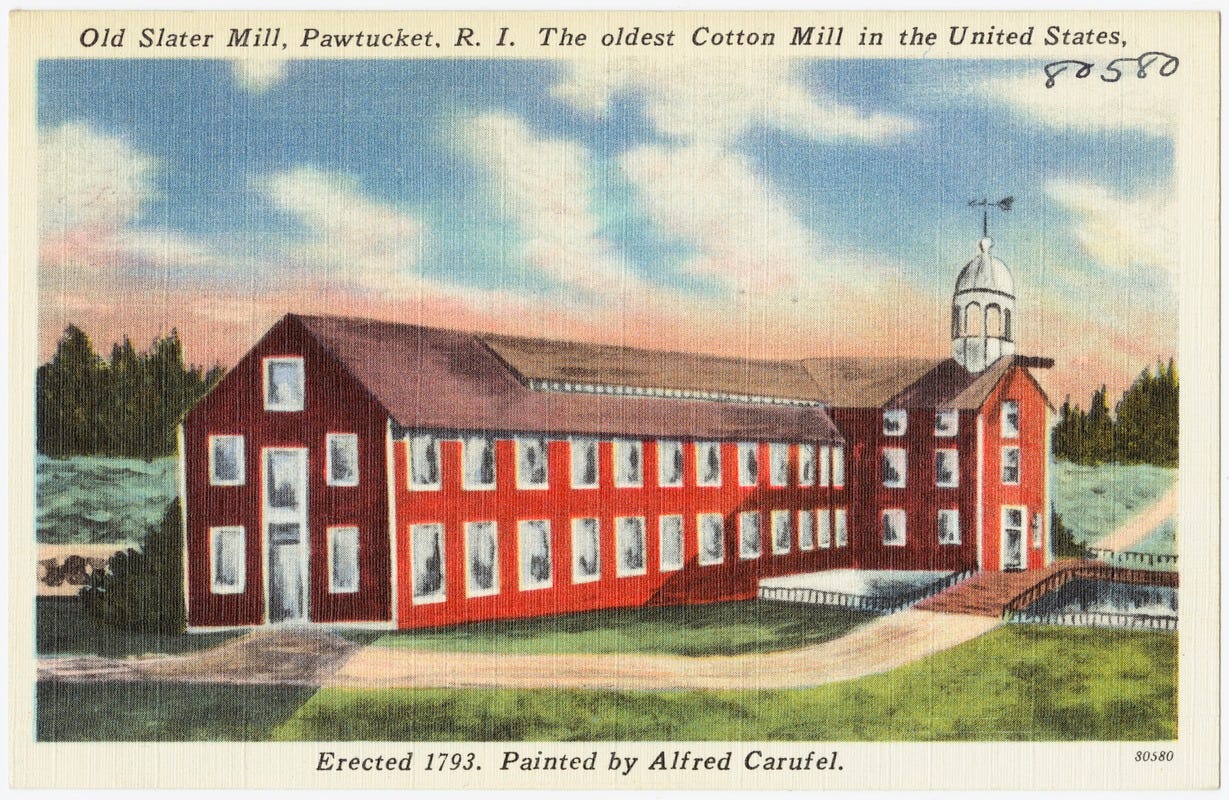
Samuel Slater disguised himself as a farm laborer and sailed from England in 1789, carrying Richard Arkwright’s entire mill system in his head. By 1790, he had built it from memory in Rhode Island. He died worth approximately a billion dollars in today’s terms. What he had transported was not a document. It was a way of looking at things.
Situational Awareness
The liquidation notice arrived at 6:14 on a Monday morning. Conrad read it twice, which took less time than he expected given its length — mostly because he had been expecting it, and because the core fact took only a sentence to deliver.
The fund was wound down. The assets were liquid. He would receive confirmation of his final net asset value by close of business Friday.
He had been running Situational Awareness LP for eighteen months. He had been right, as nearly as he could tell, about most of it. The path to superintelligence would require compute. Compute required chips. Chips required power. Power required infrastructure. He had laid out the thesis in a white paper that had been widely circulated and, up to a point, validated. Data centers had been built. Chips had shipped. Demand had exceeded several projections.
He had also taken four times leverage. This had seemed reasonable — sensible, even — at the time. A high-conviction thesis warranted a committed position. That was the whole point of conviction.
The Philadelphia Semiconductor Index had peaked in June. He had known it might. He had thought he had handled his risk. What he had managed, it turned out, was the risk he had modeled, which was not the same thing as the risk that existed.
He texted Mariam, who had been early on the same thesis and had structured her position differently — smaller, longer duration, diversified enough to survive a drawdown without a margin call. She had not called him last week. He appreciated this.
Her reply came in three minutes: You were right.
He typed and deleted several responses. He settled on: I was right the wrong way.
There was a pause. Then: That happens.
He thought about this. He had spent eighteen months being professionally right. He had built a model. He had stress-tested it. He had presented it to LPs who had believed him. The model had correctly predicted that demand for compute would be transformative. What it had not modeled was his own fund’s liquidity position under a 28.6% correction in the semiconductor index. These were not the same problem. One was a thesis about the world. The other was a thesis about his own resilience under pressure. He had been right about the first and wrong about the second, and the second was the one that mattered when the margin call came.1
He had confused a good thesis with a resilient structure. Mariam had not.
Later, he would write a post-mortem. It would be honest. He would note that it takes years to know if an AI investment strategy is compounding or wasting. That winners and losers look identical in the early periods. That the fund which looks best in the middle — the one that found something that worked and doubled down — is often not the fund that finishes best. That what distinguishes eventual winners is continuous learning, not a single correct bet made at the beginning. He had made a correct bet at the beginning. He had then stopped learning how to survive being right for long enough.2
He would not publish the post-mortem. He would write it for himself.
He pulled up the white paper from eighteen months ago and opened a new document. He typed Revised at the top. He deleted it. He typed: What I missed.
He still believed the thesis. He thought about what it would mean to hold it differently — longer horizon, smaller position sizes, structured to survive the years when everything looked like it was going wrong simultaneously, because everything would. The thesis did not care about his liquidity. The thesis would be right or wrong on its own schedule.
He thought about a story he had read somewhere, about a man who committed an entire factory system to memory in order to carry it across a border where none of it could legally travel. The man had been right about the value of what he was carrying. He had walked off a ship in a new country and built it from memory. What had survived the crossing was not the drawings. It was the understanding of how the system worked.3
He closed the white paper. He started with what he had missed.
1 Mariam would go on to run her fund for six more years and then step back to teach. She occasionally thought about Conrad’s paper. She thought it had been good work. She thought the error had not been in the thesis but in the structure — and the structure was the kind of thing you only fully understood after it failed. This seemed like an inadequate consolation and probably was.
2 The thing he had actually missed was simpler: he had invested heavily in being right about the direction, and under-invested in being wrong without being destroyed. These are different design problems and require different capital.
3 Samuel Slater crossed from England to America in 1789, carrying Richard Arkwright’s complete cotton mill system committed to memory. Britain had made it illegal to export the machinery or to allow skilled textile workers to emigrate. He arrived disguised as a farm laborer. He died worth approximately a billion dollars in today’s terms. President Jackson called him the Father of American Manufactures. Whether what he did was theft depends on which side of the Atlantic you were standing on in 1789. The knowledge crossed regardless.