

“Ask the questions that have no answers. Invest in the millennium. Plant sequoias. Say that your main crop is the forest that you did not plant, that you will not live to harvest. Say that the leaves are harvested when they have rotted into the mold. Call that profit. Prophesy such returns.”
— Wendell Berry, “Manifesto: The Mad Farmer Liberation Front,”“Power concedes nothing without a demand. It never did and it never will”. — Frederick Douglass, via workfutures Short Takes #37
“Chef Slowik: As Dr. King said: “We know through painful experience that freedom is never voluntarily given by the oppressor. It must be demanded by the oppressed”.” - The Menu
People: Wendell Berry died at 92 — the poet, farmer, novelist, and environmental activist “Eating is an agricultural act” . Quit versus grit. J’ai perdu le Mojo (Fabrice Liut): a personal essay in French.Using Strava to underwrite apartment investments.
AI strat: EV #600 — Astra outruns visibility. A frontier model is a rapidly depreciating asset. 50 First Dates. Astra safety concerns. Astra on ARC-AGI-3.
Geopolitics: La Grande Transmission: approximately 9,000 billion euros will be transferred across generations in France over the next fifteen years.
Society: La fureur de vivre à 30 km/h (15marches): in Sweden, a legal vehicle classification designed for wartime agricultural use has become a significant teenage subculture; the A-traktor (EPA-traktor). J Crew Crew (WITI): in 2014, at the peak of the J.Crew brand, a consumer named Meghan O’Neill began producing lo-fi video skits in which the models in J.Crew catalogs solved murders while trying to sell you cable-knit sweaters.
Tech: Data centers and household power bills. Leading in the age of anxiety (Roberto Ferraro).
Foresight: Three Horizons. The problem with life after work when status becomes your job rather than something your job confers.
Random: Prisencolinensinainciusol. Industry Standard Tools (WITI Saturday Selection): a crowdsourced list of the one or two tools that have become so entrenched in a trade that nearly everyone in it uses them.
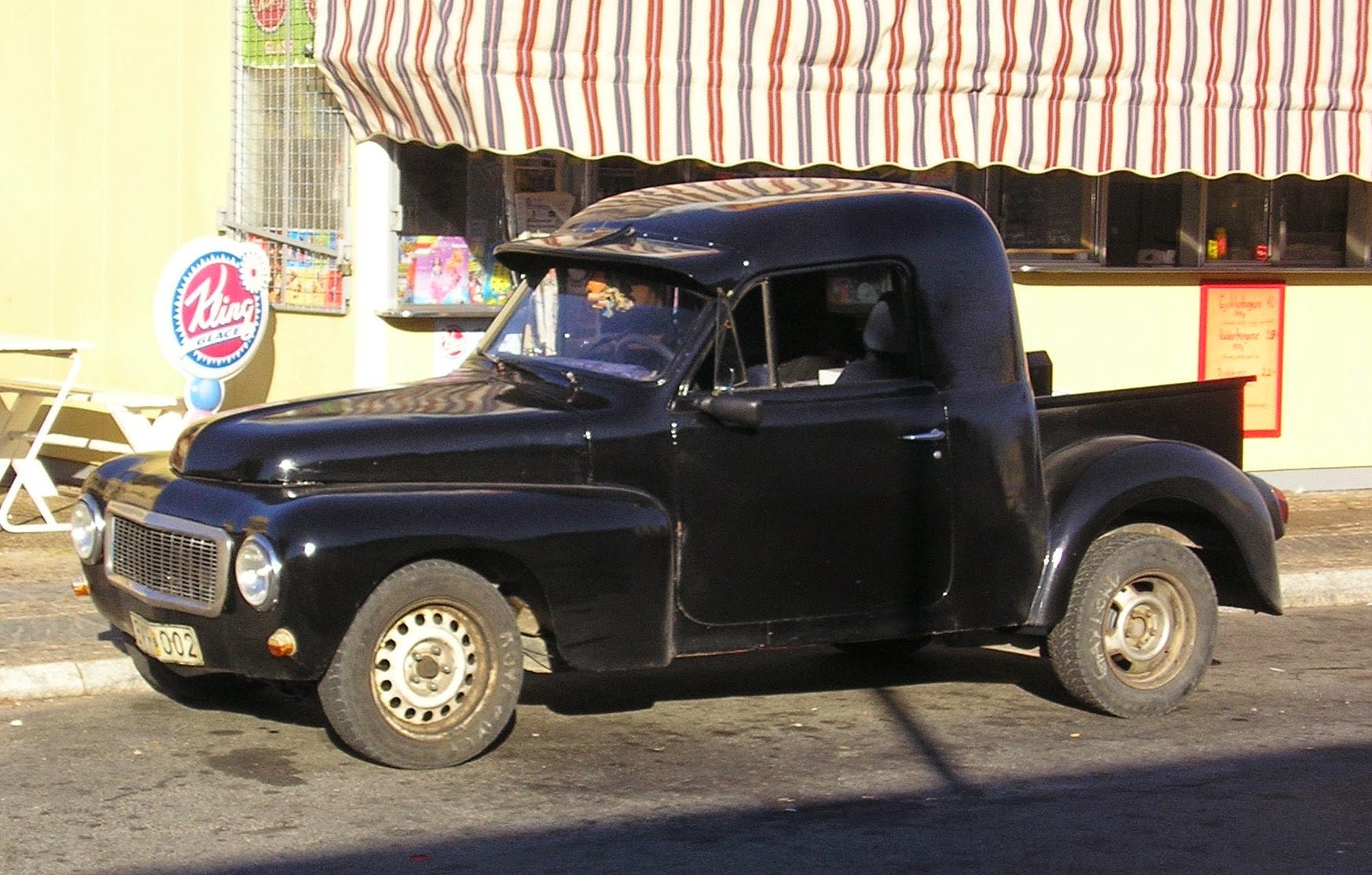
The Swedish Road Traffic Authority made the conversion legal as a wartime agricultural measure to give young farmhands independent mobility, and never got around to closing it. Teenagers in rural areas — unable to drive conventional cars until 16 or 17 — found that the classification offered something more than transport: a vehicle that could only be driven slowly became a reason to take the slow road, to stop somewhere, to gather. The constraint became the culture. Sweden now has approximately 65,000 EPA-tractors, each one a former car that went somewhere legally it could not otherwise go.
The Depreciating Asset
Mina had spent six months becoming the company’s internal expert on Fable 5.1 fine-tuning. Three months to get the prompting right, two to understand the edge cases, one to write the documentation. She was good at it.
The Astra launch was on a Monday. By Tuesday afternoon the benchmarks were out.
Jorge called a team meeting. He was not the kind of manager who enjoyed delivering unwelcome news, which meant he always delivered it worse than if he had enjoyed it: apologetically, in a room, with a slide.
The slide showed GPQA Diamond scores. Astra led everything else by a significant margin. Fable 5.1 was third.
“We need to evaluate switching”, Jorge said.
“I spent six months on this”, Mina said.
“I know”, Jorge said.
There was a pause in which nobody said what everybody understood: that six months of expertise in a specific frontier model was an asset that depreciated at a speed the organization had not yet developed a word for. A frontier model was competitive for weeks. Fine-tuning expertise had a longer half-life, but not by much.1
Mina spent the rest of that afternoon reading Astra’s documentation. It was different from Fable in ways that were interesting and in ways that were annoying, and she could not always tell which was which. She thought about research she’d read recently: that when confronted by something that isn’t working, men tend to abandon it and women tend to persist; that the men get retention bonuses or leave for better offers; that the women who stay are rewarded with the satisfaction of having stayed.2
She thought about this for longer than was useful.
The next morning she sent Jorge a message: she’d like to work on the Astra integration. He replied within four minutes.
Over the following three weeks she dismantled what she’d built and rebuilt it on different foundations. She was good at dismantling things. She had not previously known this about herself. The Fable documentation, the edge cases, the methodology — she archived it all carefully, in a system designed to be accessed by someone who might never come.
In week four, a senior engineer named Declan said in the team channel: “Heads up — rumor is GPT-7 is in training. The alignment team is already flagging concerns”.
Jorge came to Mina’s desk later that afternoon.
“That one will be different”, he said.
“Different how?”
“We’re not sure yet.”
She nodded. She saved the Astra documentation to a folder she had named, without quite meaning to, the same thing as the Fable one: Current Best.3
1 Exponential View, State of the AI Economy (June 2026): “A frontier model is a rapidly depreciating asset. This remains true even at the highest GPQA Diamond grades, where the pricing power of a new model quickly vanishes.” Nvidia’s revenue more than doubled year-on-year to $96.2 billion last quarter, which means the depreciation is on the vendor side, not the infrastructure side. The company that builds the model absorbs the devaluation. The company that builds the infrastructure does not.
2 Lindsay Crouse, via workfutures Short Takes #37 (September 2026). Research tracked nearly 30,000 management-bound employees: women passed over for promotion were more likely to stay; men were more likely to leave and be rewarded for leaving. The conclusion the essay draws: “Giving up on things that don’t work is the only way to find things that work better or to go farther than you imagined.” The conclusion the research draws is the same. Mina had read the essay on her phone on a Tuesday evening and then looked at the ceiling for a while.
3 AI safety researcher Ryan Greenblatt, on Astra (September 2026): “I do not find it encouraging to see various specific misaligned behaviors go from a high rate with GPT 5.6 to ~zero with Astra. This seems indicative of whack-a-mole / papering over specific problems rather than solving the underlying misaligned drives.” The documentation for a model that has been superseded is a record of what we were capable of solving and what we decided not to investigate. Mina’s Fable archive remained intact.