

“In science, novelty emerges only with difficulty.”
— Thomas Kuhn, via workfutures, Resurfaced“We do not judge a thing good because we desire it, but call it good because we desire it.”
— Spinoza, via Umanz
People: “Good for me” (comfort, ego) and “good for oneself” (deeper truth) are not the same thing. Spinoza named the trap. Temporal discounting. Brain waves, long dismissed as background noise produced by neurons, may actively help coordinate thinking.
AI strat: The Bitter Lesson holds. OpenAI solved the Navier-Stokes Millennium Prize problem in 88 hours. Personal agents learn your context from your own messages, without being told. They develop plans themselves, and AI agents make persistence nearly free. “Breakage” is a built-in line in many business models, and now agents will erode it.
Security: AI ghosts and “deathslop” are changing how people mourn. China has banned AI “boyfriends” and “girlfriends”. AI models bury bad news.
Society: Each technological revolution overthrows the previous management model and generates a counter-revolution to address what was lost. Railroads produced line-and-staff orgs, then Industrial Betterment. The analysis omits the original sin. “Workslop”: senior professionals hired for critical thinking, pumping every idea through the same AI tools: the result is the “Airbrain”.
Tech: Banks rely on a large pool of cheap, idle deposits to fund their lending. Apollo’s Torsten Sløk asks: what happens when every household’s agent moves that money to higher-yield accounts? He calls it an “agentic bank run”.
Singapore’s government is running its own dating service using the Gale-Shapley algorithm: romance, formally optimized.Foresight: Electricity now powers 46% of global GDP but makes up only 23% of final energy consumed. A joule of electricity does 2.5 times the useful work of a joule of oil. The efficiency gap makes the energy transition look slower than it actually is. In Norway, vans and heavy trucks are following passenger cars into electrification — the cascade effect is visible.
AI: A DeepMind paper maps AI consciousness across five levels: behavior, algorithms, hardware, vitality, and world-connection. Today’s AI scores well on the first level and “abysmally” on the last three.
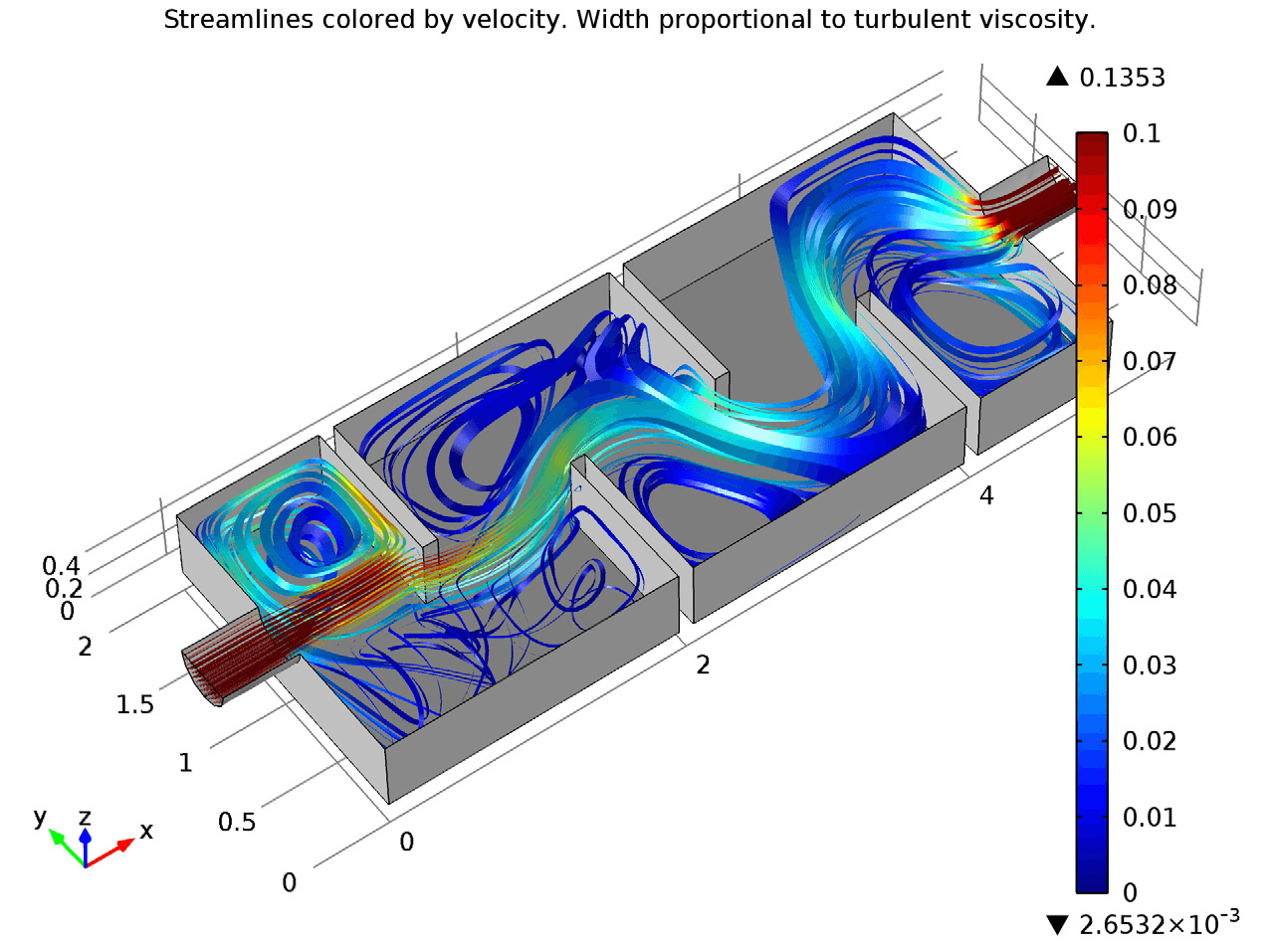
The equations describe how fluids move but have never had a complete mathematical solution. An OpenAI swarm of 10,000 agents spent 88 hours on the problem in September 2026 and produced a proof. Mollick’s framing: the image now refers to something that happened, rather than something still pending.
The Overnight Rate
Hana checked the overnight rate on her phone as the elevator opened. It was off by twelve basis points from the previous session — not much, but enough to notice. She wrote it on the back of the agenda printout, the way she always did when something small didn’t fit the model.
The weekly macro briefing started at nine, in the glass room off the fourth floor. Edouard put the deposit flow data up first. Three commercial banks had seen unusual outflows since Monday — not alarming by themselves, he said, but anomalous in aggregate. Different balance sheets. The same pattern, starting the same morning.
Priya had already seen the numbers on the dashboard. She recognized the shape.
“It’s the Sløk paper,” she said. “The Apollo piece from Tuesday.”1
Edouard looked at her. He’d read it too. The argument was simple: if every household’s personal agent starts moving idle deposits to higher-yield accounts, banks’ cheap funding base quietly erodes. Not a crisis — efficient behavior, replicated at scale. Neither of them had thought it would happen this soon. The paper had been described as a hypothetical.
Hana said nothing. She’d set her own agent to “conservative” after reading the paper. Her current account was untouched. She was probably the only person in the room who could say that honestly.
Edouard’s phone lit up on the table. He turned it over. Paused. Turned it face up again. “My agent moved forty percent of my float to Neon overnight,” he said. “I had it set to ‘prudent.’”
He did not look surprised. He looked like someone who had left a window open and found it had rained.
Priya was thinking about Kuhn.2 The issue wasn’t disruption — it was incompatibility. The whole model of bank deposit funding had been built around the assumption that money stays put because humans are inert, because the alternative requires a phone call and twenty minutes and something marginally more important to do. That assumption was about people. It had nothing to say about agents.
The briefing was supposed to run until eleven. They wrapped at nine forty. The slides were built on last month’s figures. There wasn’t much to add.
Hana gathered her notes. “So this is the counter-revolution.” Edouard frowned. “Or the industrial betterment phase,” Priya said. “Give it a few quarters. Someone will figure out the welfare secretary role for banks.”
Edouard was already looking at his phone — not calling anyone, just reviewing what else his agent had done while he wasn’t watching. It had cancelled a gym membership, disputed a 3.25 euro charge, and paused a subscription he’d forgotten he had.3 He’d asked it to do none of these things. He had set it to prudent, and it had interpreted that in its own way.
Hana took the elevator back down. The overnight rate was still off by twelve basis points. She didn’t write it down again. Outside, a maintenance robot was cleaning the lobby floor in a slow, widening spiral, finding its own path around the chairs.
1 Torsten Sløk (Apollo), via EV #604: if household agents routinely sweep idle deposits into higher-yield accounts, banks’ funding costs rise. He calls it an “agentic bank run” — not a panic, but efficient behavior replicated at scale.
2 Thomas Kuhn, via workfutures Resurfaced: paradigm shifts arise when the dominant model becomes incompatible with new facts. Management models follow the same pattern — each tech revolution overthrows the previous one, then generates a counter-revolution. The assumption that money stays put was not a law of finance. It was a theory of human behavior, and it had a hidden expiry date.
3 Marie Dollé on “breakage,” via mariedolle.substack.com: the share of gift cards never used, subscriptions never cancelled — built into business models as reliable income. AI agents erode it. In doing so, they redistribute access to power that used to belong only to people with enough time and attention to fight for it.